
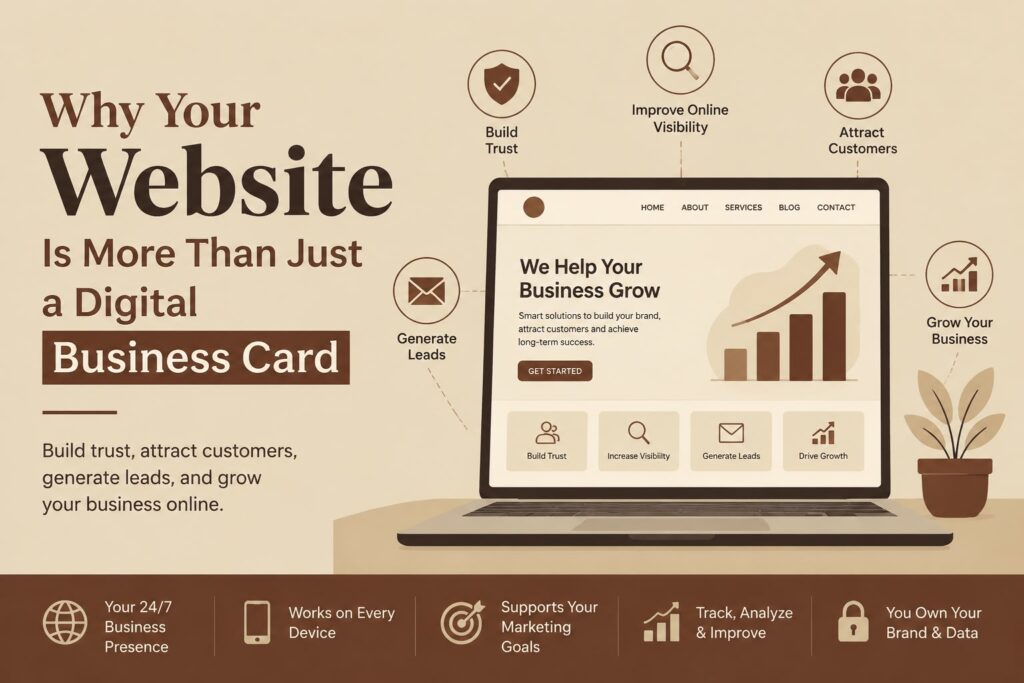
Many business owners still think that a website is just a place to put their contact info and some pictures of their products or services. I’ve talked to people who say, “I just need something online so customers know I’m there.” I get why they feel that way. In the past, websites were like online brochures. But now, a business website does much more than that.
From what I’ve seen while creating websites for different businesses, the most successful ones don’t just look good; they help build trust, answer customer questions, show up in Google searches, and get people to take action.
A website isn’t just your online presence anymore. It’s one of the busiest and most important parts of your business.
What a Modern Business Website Should Actually Do
A modern website for business should work even when you’re not. Think about it. Your website can answer customer questions at midnight, collect enquiries while you’re away, and introduce your services to someone who has never heard of your business before. When I review business websites, I often notice that many focus only on appearance. They have beautiful images but don’t explain how they help customers or what visitors should do next.
A good website should:
* Explain your services clearly.
* Build confidence in your business.
* Help visitors contact you easily.
* Answer common questions.
* Encourage enquiries or sales.
* Be easy to use on every device.
When these elements work together, your website becomes an active part of your business instead of simply existing online.
How a Professional Website Builds Customer Trust
Trust is one of the biggest reasons people choose one business over another. I’ve seen visitors leave websites within seconds because they looked outdated, confusing, or incomplete. Even if the business offered excellent services, the website created doubt.
A professional website should make visitors feel comfortable from the moment they arrive. Simple things make a difference:
* Clear business information
* Professional branding
* Easy navigation
* Contact details
* Testimonials or reviews
* Frequently asked questions
* Secure HTTPS connection
These small details tell visitors that your business is genuine and reliable. Building customer trust doesn’t happen with flashy designs. It happens by making information clear, honest, and easy to find.
Your Website Helps People Find You Through Google
One of the biggest misconceptions I hear is, “People will find me through Instagram.” Social media is valuable, but search engines work differently. When someone searches for:
* “Digital marketer near me”
* “Interior designer in Kerala”
* “Best bakery in my area”
Google shows websites that provide useful information. Without a website, you’re missing opportunities to appear in those searches. This is where digital marketing and SEO work together. An SEO-friendly website gives search engines enough information to understand your business, making it easier for potential customers to discover you.
Why SEO Matters for Every Small Business Website
SEO stands for ‘Search Engine Optimisation’. In simple words, it’s the process of helping search engines understand your website so they can show it to people searching for your services. I’ve noticed that many businesses invest in a beautiful website but ignore SEO completely.
Without proper SEO:
* Your pages may never appear in Google.
* Customers may never discover your services.
* Competitors become easier to find.
Even basic improvements like:
* Clear page titles
* Helpful content
* Fast loading speed
* Mobile-friendly pages
* Proper headings
can make your website easier for both users and search engines to understand. SEO isn’t about tricking Google. It’s about creating a website that’s genuinely useful for people.
A Website Supports Lead Generation Every Day
One thing I appreciate about a well-planned website is that it continues working after it’s published. A visitor may:
* Fill out a contact form.
* Request a quote.
* Book a consultation.
* Send an enquiry.
* Subscribe to your newsletter.
This is called lead generation. Instead of waiting for customers to message you on social media, your website provides multiple ways for people to start a conversation with your business. That’s why I always recommend including clear call-to-action buttons throughout a website. Never assume visitors know what to do next. Guide them.
Good Website Design Improves the Customer Experience
Many people think website design is only about colours and layouts. In reality, good design helps visitors complete tasks easily. I’ve seen websites where important information is hidden inside complicated menus. Visitors usually don’t spend time searching. If they can’t find what they need quickly, they often leave.
Good design means easy navigation. Visitors should find important pages within a few clicks. Mobile-Friendly Pages: Most people browse on their phones. If your website doesn’t work well on mobile devices, visitors may leave before reading anything. Fast Loading Speed: Slow websites create frustration. A faster website creates a better experience for both visitors and search engines.
Your Website Is an Asset You Actually Own
Social media platforms are excellent marketing channels. But they’re rented spaces. Algorithms change. Platforms introduce new rules. Accounts can lose reach unexpectedly. Your website is different.
You control:
* Your content
* Your branding
* Your customer experience
* Your contact information
* Your business information
That’s one reason I encourage businesses to treat their website as the centre of their online presence rather than relying entirely on social media.
Your Website Helps You Understand Your Customers
One advantage many business owners overlook is that websites provide valuable insights. Using website analytics, you can learn:
* Which pages people visit most
* Where visitors come from
* Which services attract attention
* How long people stay
* Which pages need improvement
These insights help you make better marketing decisions instead of guessing what customers want. Over time, your website becomes a valuable learning tool as well as a marketing tool.
Practical Tips for Building a Website That Supports Business Growth
From my experience, businesses don’t need the most expensive website. They need a website built with their customers in mind. Here are a few practical tips:
* Focus on solving customer problems.
* Keep navigation simple.
* Write clear and helpful content.
* Make your contact details easy to find.
* Optimise pages for search engines.
* Use professional images where possible.
* Ensure your website loads quickly.
* Keep information updated regularly.
* Include clear calls to action.
* Review your website from a visitor’s perspective.
Small improvements often create a much better experience.
Your Business Website Should Work for You
It’s a place where people learn about your business, build trust in your services, discover you through Google, and decide whether to contact you.
From what I’ve learned while planning and reviewing websites, the businesses that see the most value from their websites are the ones that think beyond appearance. They focus on creating a helpful experience that answers questions, builds confidence, and makes it easy for customers to take the next step. If you’re planning a new website or improving an existing one, don’t ask, “How can my website look better?”
Instead, ask, “How can my website help my customers?” That simple shift in thinking can make your website one of the most valuable long-term investments for your business.
Author info: Diya Nourin – Freelance social media marketing strategist in Saudi Arabia.