
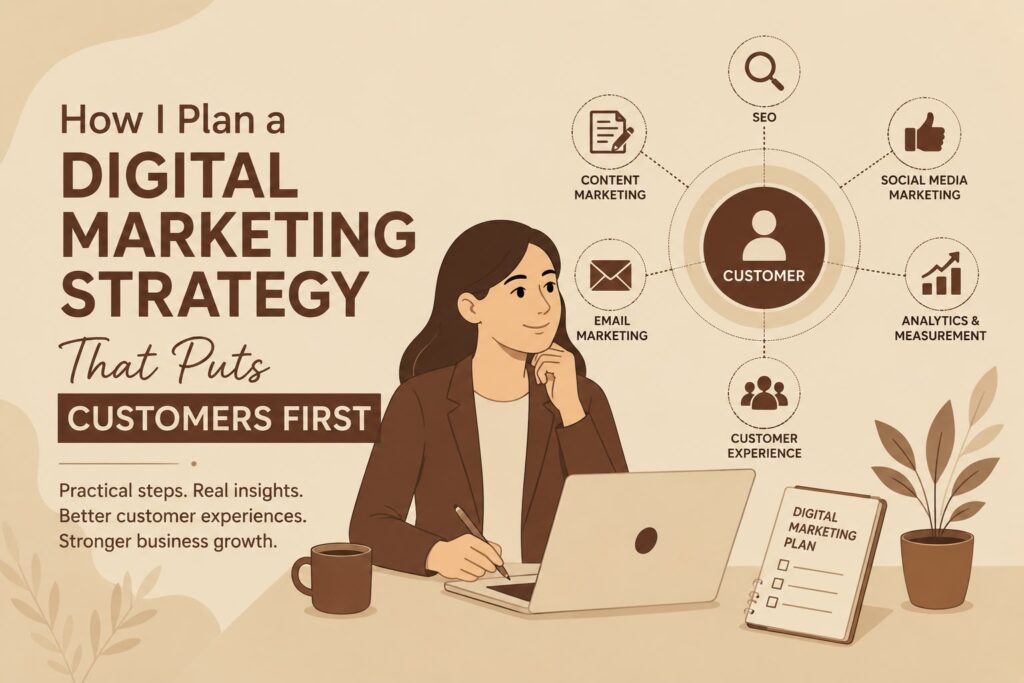
When I first started learning digital marketing, I thought the most important part of a campaign was choosing the right platform or creating attractive content. But over time, I realised something much more important. The businesses that truly connect with people don’t begin by asking, “How can we sell more?” They begin by asking, “What does our customer actually need?” That simple shift changes everything.
I’ve noticed that many small businesses spend time posting on social media, running advertisements, or redesigning their websites without first understanding their audience. When that happens, even good marketing efforts often fail to produce meaningful results. Today, whenever I create a digital marketing strategy, I always start with the customer. Every decision—from SEO and content to social media and email marketing is planned around solving real customer problems rather than simply promoting products. This approach not only creates better experiences for customers but also helps businesses build stronger relationships over time.
Why Brand Trust Matters More Than Ever
People have endless choices online. Before making a purchase, they compare websites, read reviews, browse social media, and search for information. If a business looks unreliable, visitors usually leave within seconds. Building online brand trust helps businesses:
* Increase customer confidence
* Improve conversion rates
* Encourage repeat purchases
* Strengthen online reputation
* Create long-term customer relationships
Trust isn’t simply about selling. It’s about making people feel confident in choosing your business.
Brand Trust Starts with a Professional Business Website
One of the first things I notice when reviewing business websites is how quickly people form opinions. A slow website, broken pages, outdated information, or inconsistent branding immediately raises questions. A professional business website should clearly explain:
* Who you are
* What you offer
* Why customers should choose you
* How people can contact you
Simple navigation, fast loading speed, mobile responsiveness, and clear messaging make visitors feel comfortable. Your website often creates the first impression. Make it count.
Be Consistent Across Every Platform
One lesson I’ve learned through digital marketing is that consistency builds confidence. Imagine finding one message on a company’s website, another on Instagram, and completely different information on Facebook. It creates confusion. Strong brand consistency means using the same tone of voice, visual identity, logo, messaging, and values across every platform. Customers may not consciously notice consistency, but they definitely notice inconsistency.
Authentic Content Builds Customer Trust
People don’t enjoy feeling like they’re constantly being sold to. I’ve seen brands earn far more engagement by sharing useful information instead of endless promotions. Helpful blog articles, educational videos, behind-the-scenes content, and genuine customer stories make businesses feel more human.
Good content marketing answers questions before customers ask them. Instead of saying, “We’re the best. Show people why. Teach, Explain, Help. That naturally helps build customer trust.
Customer Reviews Matter More Than You Think
Before buying anything online, many people check reviews first. I do the same. Positive customer reviews reassure new visitors that others have already had a good experience. Businesses shouldn’t be afraid of reviews.
Even responding politely to negative feedback shows professionalism and accountability. Trust grows when customers see real conversations rather than perfect marketing messages.
Social Proof Reduces Uncertainty
One thing I’ve repeatedly observed is how powerful social proof can be. People naturally feel more confident when they know others have already trusted a business. Social proof includes:
* Customer testimonials
* User-generated content
* Google Reviews
* Case studies
* Before-and-after results
* Media mentions
* Industry certifications
These aren’t just marketing assets. They help reduce uncertainty for potential customers.
Social Media Should Build Relationships, Not Just Reach
Many businesses focus entirely on increasing followers. But followers don’t automatically become customers. I’ve learned that social media marketing works best when businesses interact with people rather than simply posting advertisements. Reply to comments. Answer questions. Share customer stories. Celebrate milestones. These small interactions show there’s a real person behind the brand. People trust people before they trust businesses.
Transparency Creates Long-Term Brand Credibility
One of the quickest ways to lose brand credibility is making promises you can’t keep. If shipping takes seven days, don’t promise two. If a product has limitations, explain them honestly. Customers appreciate transparency far more than exaggerated marketing. Businesses don’t need to appear perfect. They need to appear genuine.
Customer Experience Is Marketing Too
Many business owners think marketing ends once someone clicks “Buy.” I believe it actually continues after the purchase. Fast responses. Easy communication. Helpful support. Clear return policies. These small details shape the overall customer experience. Happy customers often become repeat buyers and recommend businesses to others without being asked. That’s one of the strongest forms of trust.
Your Online Reputation Is Built Every Day
Your online reputation isn’t created by one campaign. It’s built through hundreds of small interactions. Every email. Every Instagram reply. Every customer review. Every blog post. Every website update. Everything contributes to how people perceive your business. That’s why maintaining quality consistently matters more than occasional marketing efforts.
My Biggest Lesson About Brand Trust
One lesson stands out above everything else. People don’t expect brands to be perfect. They expect them to be honest, consistent, and helpful. During my journey learning digital marketing, I’ve realized that trust grows when businesses genuinely focus on solving customer problems rather than simply making sales. That’s what separates memorable brands from forgettable ones.
Building Brand Trust isn’t about expensive advertising or complicated marketing strategies. It’s about creating positive experiences every time someone interacts with your business. A professional website, authentic content, customer reviews, transparent communication, consistent branding, and excellent customer experience all work together to build lasting trust. If you’re growing your business online, don’t ask, “How can I sell more?” Instead, ask, “How can I help people trust my brand more?” When trust grows, business growth often follows naturally.
If you’re looking to strengthen your online presence and create a brand people genuinely trust, investing in a thoughtful digital marketing strategy is a great place to start.
Author info: Diya Nourin – Freelance social media marketing strategist in Saudi Arabia.