
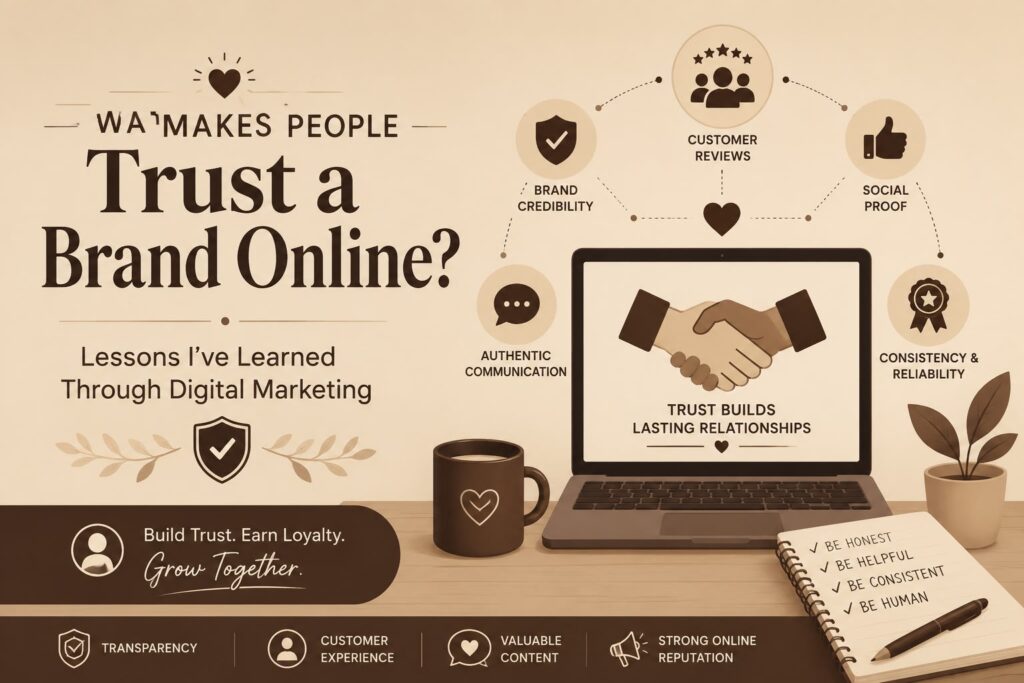
When I first started learning digital marketing, I thought great products and attractive designs were enough to attract customers. But as I spent more time analyzing websites, social media pages, and marketing campaigns, I noticed something interesting. Many businesses had excellent products but struggled to earn Brand Trust. Others, even with smaller budgets, built loyal communities simply because people believed in them. That changed the way I looked at digital marketing. I realized that people don’t buy from brands just because they’re visible. They buy from brands they trust.
Through my learning and continuous observation, I’ve found that online trust isn’t created overnight. It’s built through consistent actions, honest communication, and positive customer experiences. Here are some of the biggest lessons I’ve learned.
What Is a Customer-First Digital Marketing Strategy?
A customer-first digital marketing strategy is exactly what it sounds like. Instead of asking, “How do we sell this product?” I ask, “Why would someone need this product, and how can we help them make the right decision?” The goal isn’t to attract random visitors.
The goal is to attract the right people, answer their questions, earn their trust, and guide them naturally toward becoming customers. I’ve learned that when people feel understood, they’re much more likely to engage with a business.
Step 1: I Start by Understanding the Target Audience
Before planning any campaign, I spend time understanding who the business wants to reach. I ask questions like the following:
* Who is the ideal customer?
* What problems are they trying to solve?
* What questions do they search on Google?
* Which social media platforms do they use?
* What influences their buying decisions?
This step shapes every part of the marketing strategy. Without understanding the audience, creating content becomes guesswork. For example, a local clothing brand and a software company may both use Instagram, but the type of content their customers expect is completely different.
Step 2: I Map the Customer Journey
One lesson I’ve learned is that people rarely make a purchase the first time they discover a business. Most customers go through several stages before making a decision. These stages usually include awareness. They realise they have a problem. Consideration: They compare different solutions. Decision They choose the business they trust most.
When planning a digital marketing plan, I think about what information customers need at each stage. Someone discovering a brand for the first time doesn’t need a sales pitch. They need helpful information.
Step 3: I Build Content Around Customer Questions
Content is one of the most valuable parts of customer-first marketing. Instead of creating content based only on what the business wants to say, I focus on answering customer questions. For example:
* How does the product solve a problem?
* What makes it different?
* Is it suitable for beginners?
* How much does it cost?
* Is it worth buying?
Blog articles, videos, FAQs, and social media posts all become opportunities to educate instead of simply advertise. I’ve found that useful content naturally builds trust.
Step 4: I Make SEO Part of the Strategy from the Beginning
Many people think SEO comes after building a website. In reality, I prefer including an SEO strategy while planning everything. This includes:
Keyword Research: Finding the words customers actually search.
On-Page SEO: Writing helpful headings, titles, and content that match search intent.
Website Structure: Making navigation simple so visitors can easily find information.
Technical SEO: Ensuring pages load quickly, work on mobile devices, and are easy for search engines to crawl. Good SEO isn’t about pleasing Google alone. It’s about helping customers find answers more easily.
Step 5: I Choose Marketing Channels Based on Customer Behavior
One mistake I’ve seen businesses make is trying to be everywhere. Facebook, Instagram, LinkedIn, YouTube, Pinterest, and email.
Trying to manage every platform often leads to inconsistent content. Instead, I focus on where the target audience already spends time. If customers actively use Instagram, that’s where more effort should go. If they’re professionals looking for business services, LinkedIn may be more effective. Choosing fewer channels and doing them well usually delivers better results than trying to do everything.
Step 6: I Connect Content, Social Media, SEO, and Email Marketing
A successful digital marketing strategy doesn’t rely on one channel. Each platform supports the others. For example:
* SEO helps people discover the website.
* Content marketing answers their questions.
* Social media marketing keeps them engaged.
* Email marketing builds long-term relationships.
* A user-friendly website encourages them to take action.
When these elements work together, customers enjoy a smoother experience throughout their journey.
Step 7: I Listen to Customer Feedback
One of the biggest lessons I’ve learned is that customers often tell businesses exactly what they need. You simply have to pay attention. I regularly look at:
* Comments
* Reviews
* Frequently asked questions
* Customer messages
* Website behavior
Sometimes a single repeated question can inspire an entire blog article or video. Customer feedback often provides better marketing ideas than following every new trend.
Common Mistakes I Avoid While Planning a Marketing Strategy
Over time, I’ve noticed several common mistakes. Focusing only on selling people connect with businesses that solve problems, not businesses that constantly promote themselves. Ignoring customer intent: Creating content without understanding what customers actually want often leads to poor engagement. Forgetting the website experience: Even excellent marketing can fail if the website is slow or difficult to use. Chasing every new trend: Not every marketing trend fits every business.
I prefer choosing strategies that genuinely help customers instead of following trends simply because they’re popular. Skipping measurement: Every strategy should be reviewed regularly. Looking at website traffic, engagement, conversions, and customer feedback helps improve future campaigns.
Why Customer Experience Matters More Than Ever
Today’s customers have countless choices. They don’t simply buy products. They buy trust. A positive customer experience begins long before someone makes a purchase. It starts when they search on Google. It continues through your website, social media, content, and every interaction with your brand. When businesses consistently make customers feel understood, they naturally build stronger relationships.
Final Thoughts
If there’s one lesson I’ve learned while planning marketing strategies, it’s this: A successful digital marketing strategy isn’t about promoting a business louder than everyone else. It’s about understanding people better than everyone else. When businesses focus on customer needs, every part of their marketing becomes more meaningful. SEO becomes more useful. Content becomes more valuable. Social media feels more authentic. And customers are more likely to stay connected. Marketing trends will continue to change, but genuinely helping people will always remain a strategy worth investing in.
Internal Linking Suggestions
* Why SEO Matters for Small Businesses
* How Content Marketing Builds Brand Trust
* Social Media Strategies That Create Real Customer Connections
* Common SEO Mistakes That Reduce Website Traffic
* How to Improve Your Website’s User Experience
External Linking Suggestions
* Google Search Central (SEO best practices)
* Google Analytics Help Center
* Google Business Profile Help
* HubSpot Marketing Blog
If you’re looking for a digital marketing strategy that puts your customers first and supports long-term business growth, I’d be happy to help. Together, we can create a practical strategy that combines SEO, content, social media, and customer experience to build stronger relationships and meaningful results.
Author info: Diya Nourin – Freelance social media marketing strategist in Saudi Arabia.