
Social media has changed the way businesses connect with customers. But after working with different types of businesses, I’ve realized that simply being active on Instagram or Facebook doesn’t automatically increase sales. The businesses that see real results aren’t necessarily the ones posting the most—they’re the ones posting with purpose.
I’ve spoken to many business owners who tell me the same thing: “We’re posting regularly, but nothing is happening.” When I look at their pages, I usually notice a few common issues. Their content focuses only on selling. They don’t engage with their audience. They don’t have a clear social media strategy, and they rarely share content that builds trust.
That’s why I always remind clients that social media marketing is about building relationships first. Sales result from those relationships. In this article, I’ll share some practical lessons I’ve learned while managing business pages and explain how social media can genuinely help businesses grow their sales.
Why Social Media Marketing Is More Than Just Posting
Many people think social media marketing simply means uploading photos or creating a reel every few days. In reality, it’s much bigger than that. Every post should have a purpose. Sometimes the goal is to educate. Sometimes it’s to entertain. Sometimes it’s to build trust. And sometimes it’s to encourage people to make a purchase.
When these goals work together consistently, businesses naturally begin to increase sales through social media.I’ve seen businesses become frustrated because they expected every post to generate immediate sales. Social media rarely works that way. Instead, it helps people discover your business, remember your brand, and feel confident enough to buy when they’re ready.
I Always Start by Understanding the Audience
Before creating any content, I ask one simple question: Who are we trying to help? Without understanding the audience, it’s almost impossible to create content that connects. For example, if I’m working with a clothing brand, I don’t only think about the clothes. I think about the people buying them.
* What style do they like?
* What problems do they face?
* What kind of content would they enjoy?
* Why would they choose this brand over another?
These answers shape the entire content plan. When businesses understand their audience, their content feels more personal, and customer engagement improves naturally.
Content That Helps Usually Performs Better Than Content That Only Sells
One of the biggest mistakes I’ve seen businesses make is turning every post into an advertisement. People don’t open Instagram because they want to see endless product promotions. They want ideas. They want inspiration. They want entertainment. They want solutions. That’s why I encourage businesses to follow a healthy mix of content.
For example, a skincare brand can share skincare routines instead of only posting product images. A café can show how a signature drink is prepared.
A boutique can create styling videos. A digital marketer can explain common marketing mistakes. This type of content marketing creates value before asking for a sale. When people consistently learn something useful from your page, they begin to trust your business.
Consistency Builds Brand Awareness
I’ve managed pages where the business posted daily for one week and then disappeared for an entire month. Unfortunately, that inconsistency affects growth. People forget brands that disappear. You don’t need to post every single day. Instead, create a realistic schedule that you can maintain.
Whether it’s three posts a week or four Reels a month, consistency improves brand awareness because your audience keeps seeing your business regularly. Over time, familiarity creates trust. Trust creates customers.
Instagram Marketing Works Best When It’s Authentic
Many business owners worry too much about making every post perfect. In my experience, authenticity usually performs better than perfection. Some of the most engaging content I’ve seen includes:
* Behind-the-scenes videos
* Packing customer orders
* Staff introductions
* Product demonstrations
* Customer testimonials
* Day-in-the-life videos
These posts make businesses feel human. That’s one reason Instagram marketing has become such an effective platform for building relationships with customers. People enjoy seeing the faces behind the brand.
Facebook Marketing Still Matters
Many businesses believe Facebook is no longer useful. I don’t completely agree. It depends on the audience. I’ve noticed that local businesses, service providers, educational institutions, and community-focused brands still receive excellent engagement through Facebook marketing.
Facebook Groups, local community pages, reviews, and events continue to help businesses connect with nearby customers. Instead of choosing one platform over another, I usually recommend understanding where your audience spends their time.
Engagement Creates Opportunities
One lesson I’ve learned is that social media isn’t just about posting. It’s about responding. When businesses reply to comments, answer messages quickly, react to stories, and ask questions in captions, they encourage conversations. Those conversations often become enquiries. Enquiries often become sales. I’ve seen pages with thousands of followers receive very little interaction because they never communicate with their audience.
On the other hand, smaller pages that genuinely interact with followers often build loyal communities. That’s the power of customer engagement.
Lead Generation Starts with Trust
Many business owners ask me how to generate more enquiries through social media. My answer is usually the same. People don’t share their contact details with businesses they don’t trust. Trust develops when businesses consistently provide value. This could be through:
* Educational posts
* Customer reviews
* Frequently asked questions
* Success stories
* Helpful videos
* Honest conversations
When people trust your expertise, lead generation becomes much easier because potential customers already feel confident contacting you.
Every Post Should Guide People Towards a Goal
One thing I’ve learned while managing business pages is that many posts don’t tell the audience what to do next. Sometimes businesses create beautiful content but forget the call-to-action. A simple ending like:
* Send us a message.
* Visit our website.
* Book your consultation.
* Explore our latest collection.
* Contact us for more details.
can make a big difference. Without direction, many people simply continue scrolling.
Small Businesses Don’t Need Huge Budgets
This is one misconception I hear often. Many people believe only large companies succeed on social media. That’s simply not true. Some of the best-performing pages I’ve worked with had limited budgets but excellent ideas.
Good storytelling, consistent posting, strong visuals, and genuine conversations often outperform expensive advertisements. That’s why small business marketing doesn’t always require massive investments. It requires understanding your audience and showing up consistently.
Common Social Media Mistakes I See
After reviewing many business pages, these are the mistakes I notice most often: Only posting product photos? People need reasons to trust a business before buying. Ignoring comments and messages. Slow responses often result in lost customers. Posting without a strategy: Random content rarely builds long-term growth. Using poor-quality visuals: Your content represents your business.
Trying to sell in every post: Constant selling usually reduces engagement. Giving up too early: Social media takes time. Businesses that stay consistent usually see better long-term results.
Why Social Media Should Be Part of Your Digital Marketing Strategy
I never look at social media as a separate activity. It’s part of a complete digital marketing strategy. Your social media should work together with your website, email marketing, SEO, and paid advertising. When these channels support each other, businesses create a smoother customer journey—from discovering the brand to making a purchase.
That’s why I always encourage business owners to think beyond likes and followers. The real goal is building relationships that lead to sustainable business growth.
A Practical Example
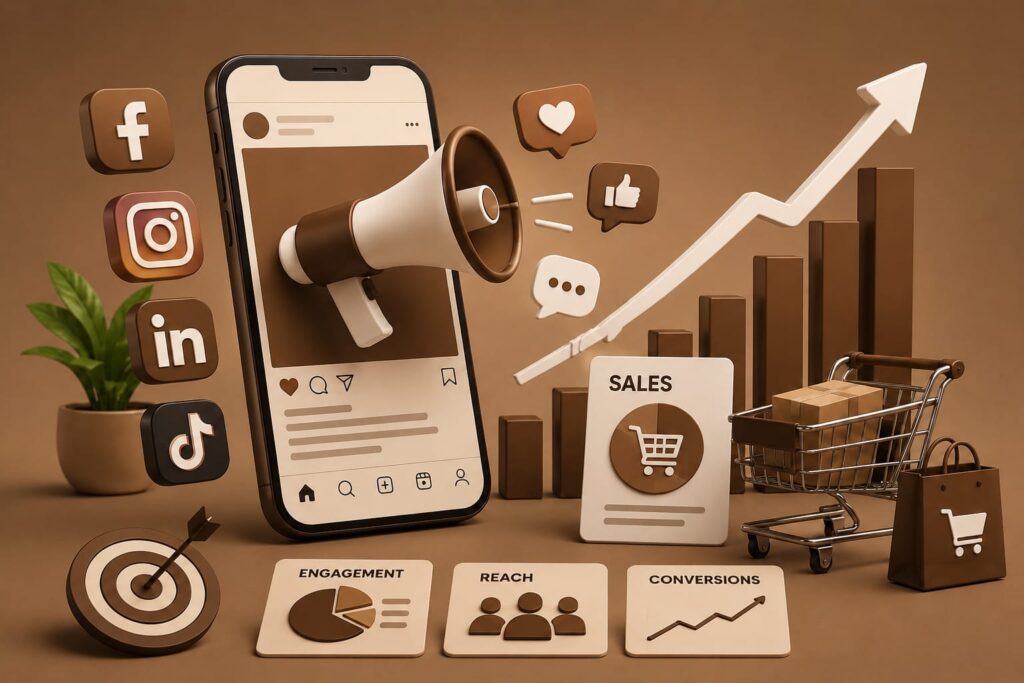
Imagine a local fashion boutique launching a new seasonal collection. By publishing engaging Instagram Reels, collaborating with local influencers, sharing customer testimonials, and running location-based Facebook and Instagram ads, the boutique attracts qualified traffic to its website. Visitors who don’t purchase immediately are retargeted with personalized offers, encouraging them to return and complete their purchase. This integrated strategy increases brand awareness, generates leads, and drives higher sales.
Over the years, I’ve learned that successful social media marketing isn’t about chasing viral trends or posting every day just to stay active. It’s about understanding your audience, creating valuable content, building trust, and showing up consistently. The businesses that achieve long-term success aren’t always the loudest online. They’re the ones that genuinely help their audience, respond to their customers, and communicate with purpose.
If you’re finding it difficult to grow your business through social media, you don’t have to figure everything out on your own. At beingdiya.com, I help businesses create practical social media strategies, meaningful content, and marketing plans that build trust, attract the right audience, and support long-term sales growth.
If you’re ready to strengthen your online presence and turn your social media into a valuable business tool, I’d love to help you get started.
Author info: Diya Nourin – Freelance social media marketing strategist in Saudi Arabia.